Not only the UOIF is inspired by the Muslim Brotherhood, but the UOIF works in a network almost exclusively formed by the Muslim Brotherhood : Ghannouchi, Mawlawi and Qaradhawi. References which must be added the Ramadan family and the Islamic Center of Geneva, with which the UOIF is working very closely. The Islamic Center of Geneva is one of the European headquarters of the Muslim Brotherhood.
The Islamic Center of Geneva was founded in 1961, with Saudi money, to Islamize the old continent and unite against “atheistic materialism” by Said Ramadan, exiled leader of the international branch of the Muslim Brotherhood. Nicknamed the “little Banna” because he was the favorite disciple of Hassan al-Banna, Said Ramadan married Banna’s favorite daughter, Wafa, and together they dreamed of seeing the triumph of the totalitarian Muslim Brotherhood political islamism from Europe. The Old Continent has even become a challenge in itself for the next generation, when the children of Said Ramadan and Wafa al-Banna were old enough to take over. The two youngest son born inEurope, Hani and Tariq Ramadan, have particularly taken over from his father’s death in 1995.
The official director of the center, Hani Ramadan, is one of the most requested speakers by the various associations of the UOIF. He even wrote several pamphlets collection of Islam, did you know?, Leaflets published by the UOIF to be distributed to Congress Bourget and serve as the basic theoretical corpus militants. One of them, The Meaning of the bid, insists that a good Muslim is totally submitted to God.
The other, Islam and Democracy, says that Islam is incompatible with democracy as understood Western [1]. One can easily imagine the influence exercised by the director of the Islamic Center of Geneva, successor to the small and large Banna, the activists of the Union. Like his grandfather, Hani Ramadan is haunted by the idea of being contaminated by the decadence of the West,
“Do we not observe this day in fact, that in our modern societies, despite the progress of Science and material comfort, we are invaded by all sorts of ailments that reflect a constant drift to worship Taghut in all its aspects? Would not that at the level of unbridled sexuality that is expressed in relationships outside marriage, prostitution, homosexuality, harassment, rape, pedophilia, incest? “[2].
Sexual liberation is one of his obsessions. In interviews, director of the Geneva Islamic Center never loses an opportunity to remind that in Islam “homosexuality is a stalemate, both from the point of view of the law revealed that the logic is not opened a door with two key “[3]. In 1998 he published a book, Women in Islam, in which he defends the right to polygamy as the best way to fight against the risk of adultery and obvious vis-a-vis secular hatred wishing to ban the veil at school: “The veil in Islam is a sign of submission to the belief in the divine commandments. Why try to prevent a young high school girl to express their conviction? The compulsion to reveal, is not to repeat the gesture of the ruthless Inquisition and communist executioners? (…) Against the secular extremists, Islam will remain in any case a school of wisdom and tolerance:
“No compulsion in religion, “says the Koran. Lesson that lay torturers have not taught us! “[4]
This book caused a scandal in Switzerland. But Hani Ramadan was dismissed from the Swiss National Education after having published an article in the newspaper Le Monde, in which he justifies stoning as “a punishment, but as a form of purification” and AIDS as a divine punishment:
“Who created the AIDS virus? Observe that the person who adheres strictly to divine commandments is immune from this infection, which can not be achieved, unless an error of blood, an individual who maintains no extramarital relationship, which has no homosexual practice and preventing drug use. ” Moral: “Muslims are convinced of the need, at any time and any place, to return to the divine law” [5].
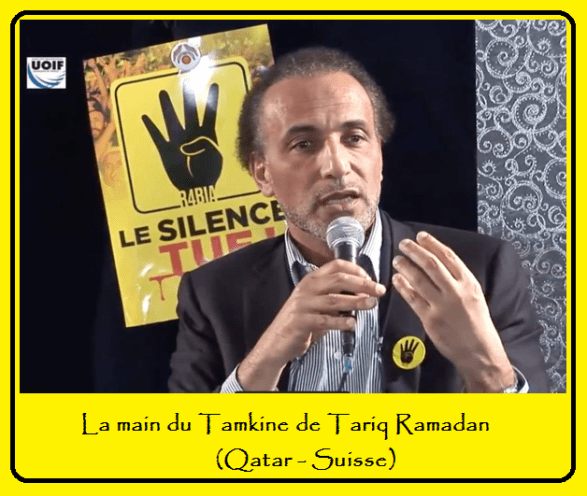
That, in a few sentences, the thought of an Islamist theorists serving as a model for the faithful of the UOIF. Often occurring at his side, his brother, Tariq Ramadan [6], is a model for all young people of the Union since 1992, when he intervened for the first time at the Annual Congress of Le Bourget, then answered all invitations satellite associations of the UOIF. That year at Le Bourget, the young preacher is expected as the Messiah by all participants. He has just returned from a quick training on Islamic issues in Egypt, but the public has heard much about him through his relationship with Hassan al-Banna and Hani Ramadan. The public immediately falls in love. Since then, Tariq Ramadan had a decisive influence on the strategy and rhetoric of the UOIF – out of the separatist confinement to become more political, and therefore more effective, on contact. In 2003, we will come back, executives of the UOIF will quarrel with Tariq Ramadan about the CFCM, but the preacher has never ceased to be admired and associations invited by the satellites of the UOIF. Moreover, when France 2 program critically Special Envoy on the preacher in November 2004, the UOIF goes immediately into the breach to defend him and asking the chain to deprogram this documentary. Proof that the links are not so distended it. Between Brothers, the division can never last very long, though short-term strategies may differ punctually. Although any dispute on the form is often interpreted hurriedly, as a war on the bottom showing independence of thought of the UOIF vis-a-vis the Muslim Brotherhood. This is what the EU would like to believe.
Fouad Alaoui, general secretary, wants to prove its independence: “We do not feel the need to belong to a foreign school of thought. We see ourselves as a school of Islam of France “. Yet when pushed into a corner, he confesses willingly be in regular contact with al-Houweidi Syrian, one of the official ambassadors of the brotherhood. [7] This means that the end of the formal tutelage vis-a-vis the Muslim Brotherhood as an organization is not an ideological break and all of emancipation, aimed primarily efficiency nationally. But this formal independence and do not advertise this refocusing provided an ideological change. The UOIF remains an organization whose model of thought and method of Hassan al-Banna, taking as reference preachers trained by the Muslim Brotherhood, networking with the Muslim Brotherhood and, above all, defending the same as Islam Muslim Brotherhood.
Fiammetta Venner
Taken from takeover of Islam in France: The ambitions of the UOIF
[1] Prospectus published by the UOIF and distributed to Congress Bourget in 2003.
[2] Hani Ramadan, Aspects of Islamic monotheism Tawhid, Lyon, 1998, p. 98.
[3] “The impasse of homosexuality”, interview by Le Nouvelliste, January 25, 2003.
[4] Hani Ramadan, Woman in Islam, Lyon, Tawhid, 2000.
[5] “The Sharia misunderstood,” published by Le Monde on 10 September 2002.
[6] Despite the decisive influence on the UOIF Tariq Ramadan, I will not elaborate more here about the character. His career and his speeches were perfectly decrypted in Caroline Fourest, Brother Tariq, Paris, Grasset, 2004 425 p.
Abdallah Schleifer is the former director of NBC Middle East office.
In the early 1990s, the American journalist born to a Jewish family from New York and converted to Sufi Islam, began a long interview with Hassan Turabi about political Islam:
“I was stunned by his intelligence and knowledge of Western culture, which is very rare among the leaders of the Muslim Brotherhood, especially those of his generation. Those young brothers currently emerging in Europe are certainly more familiar with Western culture, than were those of Turabi generation. He had studied in London, and presented his PHD thesis in Paris at the Sorbonne. He had read English and French authors in their original language. In addition to European literature, he knew perfectly the corpus of contemporary Islamic writers: Hassan al-Banna, of course, but also Sayyid Qutb, or Pakistani Abu’l-A’la Mawdudi. Many Brothers come from a secular milieu, and are not as conversant with this type of literature as one might think. Turabi seemed to me very different from the traditional leaders of the Brotherhood whom I had met so far, of whom Ayman al-Zawahiri was the typical prototype: people who studied medicine, and grew up either in a totally religious milieu, or in a secular milieu, and who became radical as a result of an accident in their private lives. Turabi was an intimidating person, but since he was friendly, I dared a question that I knew would displease him. I told him: “I converted to Islam, because I fell in love with the traditional culture I met in Morocco: warmth, people tolerance, and the universal dimension of their relationship to Islam. However, every time I have spoken with Muslim Brothers, I have more clearly recognized in their speech my past as a Marxist militant in the New Revolutionary Left, than the warmth and softness of emotions that I remembered from my stay in Morocco, and which represent true Islam for me. When I speak with Muslim Brothers, I often feel like I am with my former revolutionary companions, with members of the “party”. For me, the ideology of the Brotherhood has more to do with Leninism than with Islam.
He laughed and said:
“You are right, and you are not the first one to think so. There is no difference between us and Marxists. Even when comparing our slogans, you will be able to find common ground. The only difference is that we are the ones who chased the communists away from Khartoum.”
“Basically, Islamism is a kind of derivative of Leninism right wing. And what is Leninism right wing, if not fascism? Fascism is not a conservative movement. It has always been a revolutionary movement, as opposed to conservatism as it is to communism or other forms of socialism. Many notions have been introduced into modern politics by Marxism-Leninism, such as mass movement, flag, or salvation. All this has been renewed and in the most effective way by Leninism, of which fascism is a somewhat less utopian version than communism. In the case of Nazism, the ideal vision of a world rid of the Jews replaces the communist vision of a world rid of the bourgeoisie. Fascist salvation, from an emotional point of view, is more powerful than a closed fist. Today, we are of course horrified by this, and we associate it with Nazism and all the terrible things it has produced. But just have a look at the Nazi flag and you will understand why it means to people. The swastika has symbolized life for thousands of years in India. It is a very strong symbol, whereas the sickle and hammer only find an echo for some people; it is only the symbol of workers and peasants. Today, if I had the chance to see Turabi again, I would say to him: “I now know why your movement was able to stop communism – just as fascism, whether in Italy or Germany, was beaten by the Communists. The Muslim Brothers have been touched by Leninism, as they have been affected by many other European phenomena, but in terms of organization, as a party, as a mass movement, their closest cousin is fascism. It was much easier to understand for a Muslim Brother trained in the 1930s, like Hassan al-Banna and many others, than it is today. Leninism was in fact absorbed by the Muslim Brothers, through their romance with fascism.”
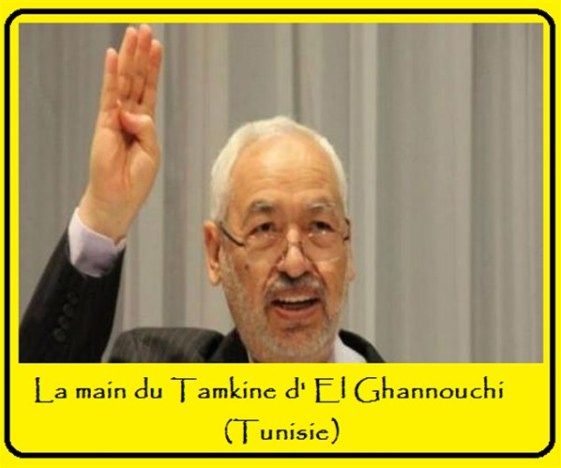
In the late 1980s, after a series of attacks by Ennahda’s military clandestine branch, and a coup attempt, Rached Ghannouchi, the founder and charismatic leader of the Tunisian branch of the Muslim Brotherhood, had to flee Tunisia. At the invitation of the FIS (Islamic Salvation Front), he settled in Algeria, where he became the political adviser of the Islamist party, and was in charge of relationships with Saudi Arabia and Qatar. But when the civil war broke out and FIS leaders were arrested, the context did not allow him to stay any longer in Algeria. He embarked once again on the road to exile.
“With the advent of democracy in the early 1990s and the coup against it during the same period, hundreds of Ennahda executives residing in Algeria, including myself, were forced to find another country. We went to Sudan. Hassan al-Turabi, head of the Sudanese Muslim Brotherhood, was one of our friends. We were very much influenced by his movement when he was an opponent to the regime. However, the situation changed when he took power [in 1989, in the entourage of the new head of state, General Omar El Bashir]. But in the 1970s, the Sudanese Islamist movement was one of the most inspirational for Islamist movements in Tunisia, in addition to the Iranian revolution, and the Islamist movement of Nadjm Eddine Arbakan in Turkey, which also had an important impact on us.“
In an interview with Al Shira in October 1994, in London, the leader of Ennahda has no word strong enough to convey his admiration for Hassan al-Turabi:
“Dr. Tourabi is a” Mujaddid “(a reformer). He has inspired a whole generation of Islamists, and I am one of them. This is due to the commitment of his intelligence to the established tradition (Fikr Usuli), to his realistic and practical approach to Islam. This does not mean that his opinion on specific problems or cases is accepted by all Islamists. I can speak only for myself, and, as far as I am concerned, I think that Tourabi is the master of our generation“.
Muslim Brothers do not recognize Baghdadi caliphate, but have their own project for establishing a transnational caliphate under the Shariah law
In an article posted November 24, 2014 on the Muslim Brotherhood (MB) website, columnist Hilmi Al-Qa’oud, who is a lecturer at Egypt’s Tanta University, praised the notion of the Islamic caliphate, and criticized the Arab regimes, especially the Egyptian regime, for “demonizing” this notion since the Islamic State‘s (ISIS‘s) declaration of a caliphate in June 2014.
He accused the regimes of waging a campaign, by means of their clerics and educators, to present the caliphate as a sin and as the embodiment of murderousness, tyranny and backwardness, and said that the goal of this campaign is to serve the West and the Jews by keeping the Muslims weak and divided.
Al-Qa’oud argued that the West has a kind of caliphate – the “imperialist Crusader” European Union – but nobody condemns or disparages it, and added that most Muslims yearn for the establishment of a large-scale caliphate of their own that would defend them against the “Crusader-Jewish conspiracy.” He mourned the fact that it is currently impossible to establish such a caliphate, due to the opposition of the regimes. He refrained from condemning ISIS itself, saying that, according to some reports, it promotes social justice and people welcome it
It should be noted that the MB has so far refrained from taking an official position on ISIS, but has come out firmly against the international coalition that has been formed to fight this organization. In a statement it issued, the MB said that the term “war on terror” is a cover for a war against Islam and the Muslims, and that the only terror that needs fighting in Egypt is the terror of the Al-Sisi regime against the MB.
An article on the MB website stated that the real goal of the international coalition is a new imperialistic takeover and the division of the entire region, so that no country in it would retain its territorial integrity, except the “Zionist entity.”
It should be noted further that some reports in the Egyptian media spoke of an affiliation between the MB and ISIS, including a report that MB supporters waved ISIS flags at a November 21, 2014 MB demonstration against the regime. Furthermore, the Egyptian regime associates the MB with the Sinai-based terrorist organization Ansar Bait Al-Maqdis, which recently joined ISIS.
The Alkarama Award is granted annually to a person or organization that has, according to the Organization, “significantly contributed to human rights promotion and protection in the Arab world”.
The award ceremony takes place in Geneva on the occasion of Human Rights Day (10 December).
Former award winners include:
Shireen Issawi, a well-known lawyer and Human Rights Defender for the Occupied Palestinian Territories (2014)
In the absence of Shireen still detained in Israel, the Award will be handed to her parents, Layla and Tarek Issawi, by Ruth-Gaby Vermot-Mangold, a former member of the Swiss National Council and President of Women of Peace Around the World. Confirmed speakers include: Dr Norman Finkelstein, an American political scientist; writer Haneen Zoabi, the First Israeli Arab woman elected to the Knesset; and Dr. Richard Falk, a former UN Special Rapporteur on the situation of Human Rights in the Occupied Palestinian Territories since 1967. The Master of Ceremony is: Guy Mettan, Executive Director of the Swiss Press Club and Deputy of the Grand Council of Geneva
Several members of the Muslim Brotherhood (MB) recently reported on their social media accounts that a delegation of MB members had visited the U.S. State Department on January 27, 2015 and met with officials from the State Department and White House, as well as with members of Congress and representatives from American research institutes. According to the MB reports, the purpose of the meeting was to recruit support for their opposition to the ‘Abd Al-Fattah Al-Sisi regime in Egypt.”[1]
On its part, the American administration was embarrassed by the publication of the visit, but openly acknowledged it a few days later. State Department Spokesperson Jen Psaki said that the MB members were part of a larger delegation that included former Egyptian MPs, among others, and that they are not currently active in the movement. She added that State Department meetings with various political elements were routine. The Egyptian regime, outraged by the visit, accused the U.S. administration of not respecting the Egyptian law that defines the MB as a terrorist organization, and of discounting the will of the Egyptian people. It also claimed that this conduct flies in the face of U.S. policy, which champions the struggle against global terrorism. Criticism of the U.S. was also voiced in the official Egyptian press and in the Saudi press.The fact that the reports on the visit coincided with the January 31 large-scale terrorist attack in Al-‘Arish, in which 31 people were killed and which the Egyptian regime and media attributed to the MB, only increased the rage towards the U.S. Some articles even accused it of being behind the attack itself.
This report will review the reports on the MB members’ visit to the U.S. and the subsequent outrage in Egypt.
MB Members Report Visit To U.S. State Department On Their Facebook Pages
According to Sharaby, the Egyptian Revolutionary Council delegation recently visited more than 27 countries.[3] In the run-up to the fourth anniversary of the revolution that ousted Mubarak on January 25, the council also sent letters to 19 foreign ministers and the heads of three international organizations in an attempt to convince them to end support for “the military coup regime in Egypt.”[4]
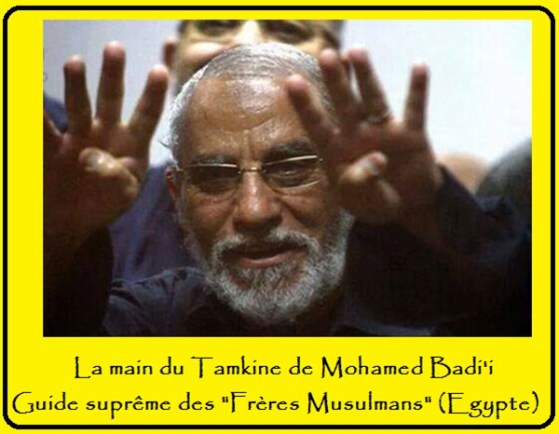
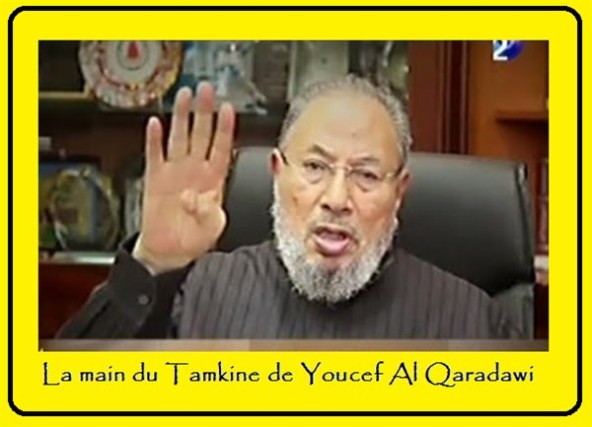
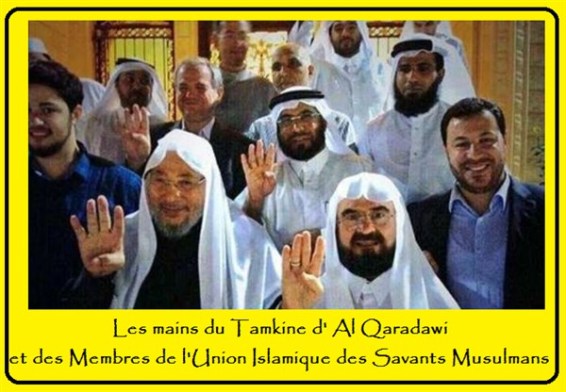
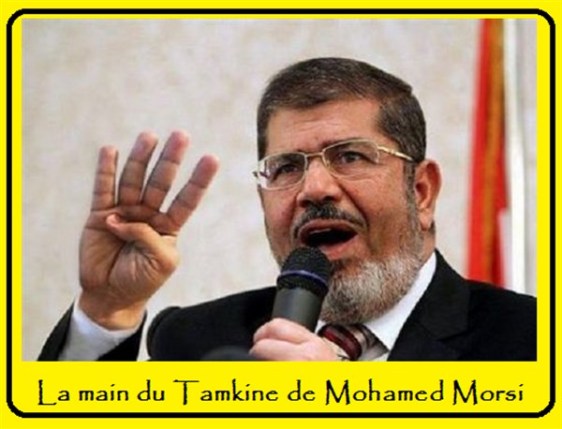
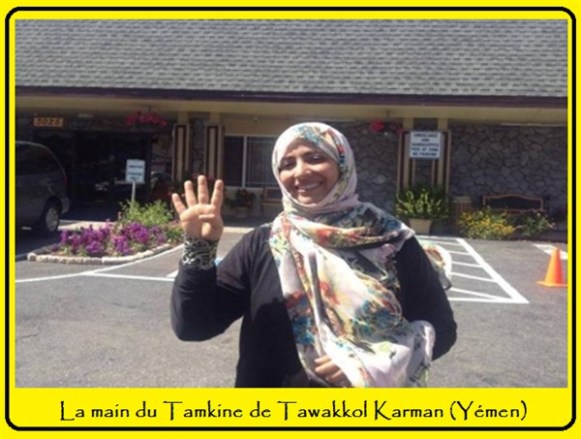
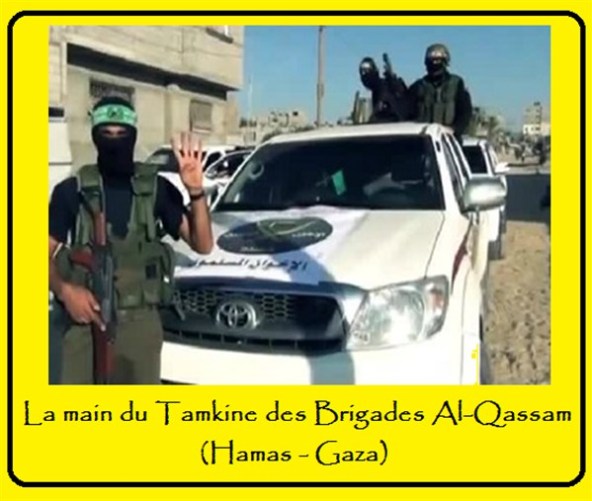
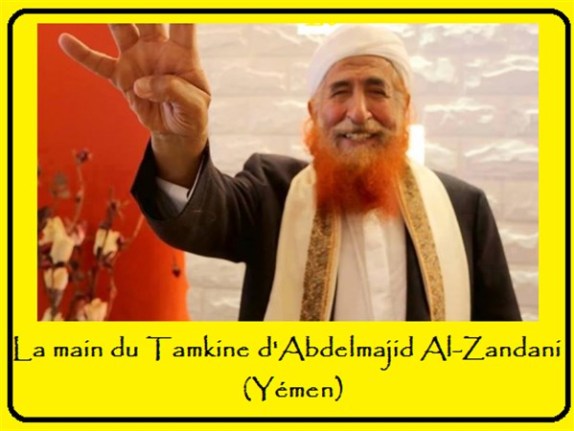
As stated above, the delegation members took to their Facebook accounts to report on the meetings they had held, and even posted photos of themselves in the State Department building. Some of the pictures feature members holding up four fingers in the “Rabaa” sign, which has become associated with the MB and its supporters.
From Waleed Sharaby’s Facebook page: “Currently in the American Congress” (from left to right: Maha ‘Azzam, ‘Abd Al-Mawgood Dardery, Tharwat Nafea’, Gamal Heshmat, Waleed Sharaby; Facebook.com/waleed.sharaby, January 28, 2015)
Another Facebook post by Sharaby: “Currently in the American State Department” (Facebook.com/waleed.sharaby, January 26, 2015)
Facebook post by delegation member Gamal Heshmat: “Meetings with American State Department, White House representative, members of Congress, and with research institutes that influence American policy were positive…” (Facebook.com/Dr.GamalHeshmat1, January 29, 2015)
U.S. Administration: Hosting The Delegation – Part Of Routine Meetings With Politicians
The delegation’s visit to the State Department was made public only when the images were posted to Facebook – embarrassing the U.S. administration. It appears that this embarrassment was also the reason for the delay in the administration’s response to reporters’ questions on the matter. When first asked about the affair in a daily briefing on January 27, 2015, State Department Spokeswoman Jen Psaki said that she had no details on the visit. Only two days later, when asked again, Psaki confirmed the visit, but stressed that it was not an MB delegation, but rather a delegation including former Egyptian MPs, some of whom were from the MB’s Freedom and Justice Party. Psaki said: “The State Department officials met with a group of visiting Egyptian former parliamentarians whose visit to the United States was organized and funded by Georgetown University. These meetings are fairly routine. The group included some former members of the Freedom and Justice Party, among others…” Psaki mentioned that the delegation had met with the Deputy Assistant Secretary of the Bureau of Democracy, Human Rights, and Labor, among others, and that the topic of president Mursi’s ouster had not been discussed.
When asked whether the delegation members had breached protocol by posting pictures of their visit to the State Department on social media, Psaki said that many visitors took pictures and that she wasn’t convinced this constituted any violation or that it was an issue. When a reporter pointed out that the pictures were used to show that the State Department supports the MB, Psaki repeated that the meeting had been with a mixed delegation that included former members of the Freedom and Justice Party. When asked about a recent post on the MB website that calls for “a long, uncompromising jihad” and for drawing inspiration from the MB’s old military wing,[5] Psaki said she was unaware of this and that she would look into it.[6]
On January 30, 2015, the same day the administration admitted that the meeting had taken place, the Egyptian Revolutionary Council also issued a statement on the delegation’s visit to the U.S. According to the statement, the delegation met with representatives from the White House and State Department, as well as with congressmen and some American research institutes, with the purpose of conveying several messages: that the events in Egypt on June 30, 2013 were a military coup against the legitimate, democratically elected Mursi regime, and that the American administration should stop supporting the “unstable and unsustainable” Al-Sisi regime; that the Egyptian judiciary is persecuting the political opponents of the military regime; and that the Egyptian military should return to its barracks and keep out of Egyptian politics. According to the council’s statement, various bodies that were recently established, and various actions that were carried out, were a response to the crimes of the military regime: to the terrorism, arrests and torture conducted by security forces against peaceful protestors, and to the justice system’s lack of neutrality. Finally, the statement says that the meetings were positive and ended in recommendations for additional meetings in the future.[7]
Al-Sisi: The MB Is The World’s Most Dangerous Secret Terrorist Organization; Egyptian Foreign Minister: The U.S. Must Respect Egyptian Law, Which Defines The MB As A Terrorist Organization
On January 31, 2015, the day after the U.S. administration confirmed the delegation’s visit, in a statement to the press at the close of the African Union summit in Addis Ababa, the Egyptian President refrained from addressing the delegation’s visit to the State Department, but said that the MB was “the world’s most dangerous secret terrorist organization” and that it “has clandestine wings and secret ideas and tools… which is why Egyptians rose up against it…”[8]
The Egyptian Foreign Ministry expressed outrage at the U.S. State Department’s hosting of the MB delegation. At the end of the African Union summit, Egyptian Foreign Minister Sameh Shoukry addressed the State Department’s explanation, saying: “I do not understand [the State Department’s] claims. We do not understand the existence of such ties with elements that are involved in terrorist activists meant to terrify Egyptians.” He added: “The MB movement is not a political party. Egyptian law – which should be respected, just as we respect the laws of others – defines it as a terrorist organization, based on evidence and testimony we have that indicates their involvement in terrorist actions meant to harm the lives of Egyptians, terrorize them, and threaten their security.” Shoukry said further: “If we wanted to bury our heads in the sand so as not to face reality, that would be another matter. But we see very well.” According to him, “terrorism is not just ISIS or Boko Haram, but rather all terrorist groups, regardless of what name they use, since they [all] champion the same ideology and the same ideas leading to death and destruction…”[9]
An Egyptian Foreign Ministry communique from February 1, 2015 states that the Egyptian Revolutionary Council and the MB’s parliament in exile consistently incite violence and terrorism, spread lies abroad regarding the situation in Egypt, and do not represent the will of the Egyptian people. Moreover, some of their members are wanted by the Egyptian authorities, and therefore holding ties with these “illegitimate organizations disrespects the will of Egyptians and grants legitimacy to entities that attack it.” The communiqué states further: “The contacts held by some countries with these terrorist entities enable them to spread their ideas, which incite violence and terrorism. They also contradict [these countries’] presumed commitment to the struggle against terrorism and extremism…”[10]
Egyptian Columnists Attack U.S. Hypocrisy In War On Terror
The Egyptian press was also furious with the U.S. administration for hosting the MB members. Several articles accused the U.S. of hypocrisy and double standards regarding terrorism, stating that the U.S., which calls to combat global terrorism, actually supports the mother organization of global terrorism – the MB. Some articles also tied the Al-‘Arish attack to the MB members’ visit to the U.S., and accused the U.S. of fostering terrorism in Egypt.
‘Al-Ahram’ Editor: Egypt Should Boycott Washington Counter-Terrorism Summit In February 2015
In a February 6, 2015 column, Al-Ahram editor Muhammad ‘Abd Al-Hadi ‘Allam accused the American administration of being two-faced regarding terrorism and called on Egypt to boycott the Washington Counter-Terrorism Summit in mid-February (a call which the Egyptian foreign minister did not heed). ‘Allam wrote: “After the Charlie Hebdo events in Paris… The White House issued a stern statement calling to convene an international summit in Washington on February 18, 2015, to deal with the danger of extremist organizations… [But] the Americans’ current path raises questions and does not provide answers regarding their vague policy, which only increases confusion regarding events in the Arab region. How can a superpower that speaks of combating terrorist groups argue at the same time that their mother organization – the MB – does not threaten the interests of countries that are its friends and allies, despite [the MB’s] methods of violence and sabotage?… Last week, new details were exposed in Washington regarding ties held by U.S. authorities with the MB, after the State Department was forced to admit that it had held a special meeting with a delegation of leaders of the global MB organization, fugitives from justice who arrived in the American capital…
“Some may claim that it is in Egypt’s interest to attend the Washington summit and that presenting the positions of the Egyptian political leadership [at this summit] could change the positions of some U.S. elements regarding the extremist groups who all draw [their ideas] from the same source… [However,] not attending [will send a message] to the world that there is a certain flaw in the [American] policy that condemns terrorism on the one hand and is forgiving of it on the one hand, and that this policy lacks a proper compass and lacks the wisdom that should be at the base of the superpowers’ positions at this crucial stage of Middle East history… [Egypt] not attending [the summit] will convey its message to the free world, namely that there is a clearly laid-out plan to crumble the Middle East into weak statelets, where Western forces will negotiate with extremist groups that realize the interest of certain countries to take over regional resources…
“It seems that the American administration wants a meaningless ‘public relations summit’ that does not [really] strive for clear resolutions on dealing with extremist organizations, chiefly the MB, which the Egyptian nation ejected from its midst, and which sister Arab governments have [also] outlawed, alongside other entities that are no less dangerous. The question for those in charge of the American summit is: Have you not considered that, for the summit to succeed, you must publicly declare that you wash your hands of the forces of global terrorism? Did you not consider the fact that you cannot organize a summit attended by the same very elements that are part of the problem… such as Qatar… and the Turkish government…?
“[Our] vital relations with the U.S. should not prevent us from pointing to the weaknesses and sources of danger in the current American policy, which proceeds blindfolded. This, while senior American writers and analysts recognize that current American policy requires a new compass, after it was proven that the policy implemented in recent decades merely leads to more confusion and frustration… We want American officials to understand that we are better versed in the matters of this region than others, and that [their] illusion that supporting the streams of political Islam [will enable them to] play a role in dividing control [of the region] will only lead the region to crumble further and will increase discontentment there. Then the U.S. will find itself dealing with the heritage of hatred for its policy on a much larger scale than today.
“Future generations will see the U.S. as the only country that stood by extremism and terrorism to the end, instead of changing its choices and recognizing that the peoples are entitled to life and to modern states that ensure everyone’s rights without discrimination and which remove the dust of ignorance, hatred and sectarianism…”[11]
The article was accompanied by the following cartoon:
U.S. calls to “stop ISIS terrorism” while ignoring and sheltering “MB terrorism in Egypt”
U.S. Raises Banner Of War On Terror, While Supporting Terror
Muhammad Abu Al-Fadel, a columnist for the government Egyptian daily Al-Ahram, wrote in a similar vein: “The international handling [of terrorism] should be uniform and balanced, and free of hypocrisy or political manipulation. Following the recent events in Egypt [i.e. the January 31 terror attack in Al-‘Arish], several countries in the world – the same world that was outraged by the [terrorist] events in France – expressed mere condemnation and sympathetic words, shamefully contradicting [them with their actions]. The U.S., which following the France events called for an international conference on terrorism in Washington, was one of the countries [whose words] most contradicted [its actions]; mere days after calling [for the conference], it hosted some MB leaders, receiving them with warm friendship. This was despite the fact that they and their ilk are at the movement’s forefront, and are some of the main inciters of the terrorism and violence that struck Al-‘Arish and various provinces in Egypt in the recent days.
“The Washington officials could not justify the warm welcome they had given to the [MB] figures, whom the world has seen openly encouraging violence and cheering, together with others like them, whenever an Egyptian soldier or policeman is killed. Using groundless pretexts, [Washington] merely said that it had received [these leaders] as part of its openness to [various] political forces. What forces is the U.S. talking about, when it [itself] bears the motto of combating terrorism in the world while at the same time carrying a sign supporting it?…
“Those who see the joy on the faces of [the MB members hosed by the State Department]… so apparent in the photos that they uploaded to their websites, get the sense that they have won another round. For the thousandth time, Washington proves that it has no good intentions towards Egypt, and that it remains determined to not change its faulty perceptions giving supporters of violence an elixir of life every time they face imminent political and security defeat.
“The problem is that the U.S., which presumes to lead a global war on terror, completely ignores the fact that its despicable policy has [actually] played a crucial role in fueling it… Egypt was not the only one to warn that terrorism is a single entity, from Iraq through Syria and Libya to Yemen. Some in the West heeded [this], and quickly coordinated and cooperated with us; some stopped up their ears so as not to hear such counsel which troubles them. [But] this was not enough [for these latter who did not want to hear]; they went on to deliberately attract terrorists to them by defending their methods of operation, which often come in the guise of humanitarianism and human rights…
“Recently, several observers in the U.S. did well to refuse to receive MB leaders, but these [elements] need to also prescribe a treatment for the American administration that sponsors and will lead the February 18, 2015 Washington Counter-Terrorism Summit. Maybe then [this administration] will understand the failures in the path it is taking, and will acknowledge the real situation in Egypt and change its perspective…”[12]
MB member says to ISIS member on the steps of the White House: “They welcomed me, which means that they welcomed you, so the house is your house.” (Al-Yawm Al-Sabi’, Egypt, February 6, 2015)
The U.S. Is Extending The MB’s Life Of Terrorism
Makram Mohamed Ahmed, another columnist for Al-Ahram, also attacked the U.S., writing: “The support that the [MB] movement received from Washington, as manifested by the White House meetings, is an important factor that spurs them to continue their plans and pushes them towards more idiotic adventures that set them on the path of perdition, after their rapid failure at all their previous attempts. However extensive the foreign support they muster, they [still] cannot defeat the people, the military, the police, and all the institutions of Egyptian civil society, especially because everyone knows that if the MB return [to power] over the objections of the Egyptian people, it will mean, God forbid, inevitable civil war…
“The problem lies with the American position, which we know full well is the only thing extending the MB’s life of terrorism. Although the power balance on the ground in Egypt clearly and decisively confirms that the movement cannot possibly be victorious, the Obama administration continues its dirty game, supports terrorism, threatens Egypt’s stability, and revives in the minds of the peoples of the region the image of the ugly American that seeks to impose on Egypt a backwards tyrannical regime that has no base of legitimacy and is detested by a clear majority of the Egyptian people.”[13]
The U.S. Is Responsible For Al-‘Arish Terror Attack And Is Working To Topple Egyptian Regime
In another column in Al-Ahram, the daily’s former editor Morsi ‘Atallah wrote: “Apparently, the U.S. has learned nothing from its series of failed experiments in the region and its repeated gambling on agents and mercenaries in the service of American interests. It is now deluding itself regarding the possibility to repeat what it did in Iraq to prepare the ground for toppling Saddam Hussein‘s regime, without realizing that the Al-Sisi regime, which enjoys popular and Arab support, is nothing like Saddam’s…
“It is now obvious that the U.S. is continuing to cast its lot with the policy of ‘destructive chaos’[14] formulated by [former U.S. secretary of state] Condoleezza Rice… Therefore, it can in no way be considered an exaggeration to accuse the U.S. of sponsoring terrorist organizations, and to hold it responsible for the Al-‘Arish crime and the crimes that preceded it. The U.S. is to blame, and is involved in the events on the ground in Egypt; this is not unusual for a country that welcomes ties with those who have neither identity nor affiliation, and who are not against turning the homeland into rental property or into an investment firm and satellite of the American master…”[15]
U.S. Policy Regarding Political Islam Is Plagued By Ignorance And Double Standards
In his column in the Egyptian daily Al-Masri Al-Yawm, which is close to the regime, Muhammad Salmawi wrote: “The [MB officials’ State Department] meeting has grave implications, as it proves that Washington has not deviated one bit from its policy of double standards: It fights the terrorism of political Islam as it provides it with aid and support. This policy stems from a highly dangerous notion that there is a ‘moderate’ political Islam, and that if Washington can maintain close relations with it, it could control the extremist elements within it. This idea, if it shows anything, shows the U.S.’s absolute ignorance regarding the nature of this political Islam, and regarding its history since the founding of the MB in 1928…
“The MB movement is the mother organization that birthed all the world’s political Islam movements, without exception… If these movements use violence to achieve their goals, it is because the MB itself grew through violence… This deceptive policy of both Washington and the MB will have disastrous consequences that will prevent any future attempt at [Egypt’s] reconciliationwith both the MB and American foreign policy.”[16]
Saudi Daily: U.S. Administration Does Not Grasp The Scope Of Opposition To The MB In The Middle East
The February 3, 2015 editorial of the Saudi Al-Watan daily. Titles “America and the MB – The Mistake Is Repeating Itself,” also addressed the MB officials’ State Department visit: “The hosting of a delegation of the terrorist MB movement by the U.S. State Department sparked widespread criticism by some American analysts, because the State Department, and the Obama administration in general, have yet to grasp the scope of the extensive popular opposition to the MB movement across the Middle East – particularly in the wake of the June 30, 2013 mass protests, the likes of which had never before been seen in Egypt…
“History proves that peoples always emerge victorious in their campaigns against the forces of darkness and destruction. Furthermore, all political Islam movements must realize that every crime they commit or to which they are an accessory increases the popular opposition to them. They must understand that the world’s confidence in Egypt’s trends and policy will not be harmed, and that their desperate attempts to disrupt the [mid-March 2015] economic summit [in Sharm Al-Sheikh that Al-Sisi is organizing] will not succeed…”[17] “War on Terror” (Al-Watan, Saudi Arabia, February 6, 2015)
Endnotes:
[1] Ikhwanweb.com, January 31, 2015. The delegation attended a panel hosted by Washington’s Center for the Study of Islam and Democracy (CSID), which is sponsored by Georgetown University. Al-Yawm Al-Sabi’ (Egypt), February 2, 2015.
This is the first in–depth study of the relationship between
the Egyptian Muslim Brotherhood and its own members. Drawing on years of
participant observation, extensive interviews, previously inaccessible
organizational documents, and dozens of memoirs and writings, the book
provides an intimate portrayal of the recruitment and socialization of
Brothers, the evolution of their intricate social networks, and the
construction of the peculiar ideology that shapes their everyday
practices.
Kandil shows why attempts to compare the Brotherhood to secular
social movements or typical forms of religious activism obscure its
unique nature, and he seeks instead to unlock the organization s unique
logic. Building on his original research, Kandil reinterprets the
Brotherhood s slow rise and rapid downfall from power in Egypt, and
compares it to the Islamist subsidiaries it created and the varieties it
inspired around the world.
This timely book will be of great interest to students and scholars
of the politics of the Middle East and to anyone who wants to understand
the dramatic events unfolding in Egypt and elsewhere in the wake of the
Arab uprisings.
Speech from the Throne By His Majesty King Abdullah II Opening the Second Ordinary Session of the 17th Parliament Amman, Jordan 2 November 2014
(Translated from Arabic)
In the Name of God, the Most Merciful, the Compassionate
Prayers and peace be upon Our Master Mohammad, the Honest Arab Hashemite Prophet
Honourable Senators,
Honourable Representatives,
Peace, God’s mercy and blessings be upon you.
In the name of God, and with His blessings, we inaugurate the second
ordinary session of the Seventeenth Parliament. This step constitutes a
new milestone in our journey towards deepening democracy, particularly
its parliamentary pillar, and to continue our reform drive and serving
our homeland and citizens.
On this day, I address all Jordanians and greet them with honour and
pride, for they have demonstrated throughout the years their ability to
stand firm in confronting challenges imposed by historical
transformations in the region, relying on their national unity and
consensus on protecting their homeland, a country which has sacrificed
greatly for Arab and Muslim causes.
Despite all challenges, Jordan did not and will not allow for
difficulties and regional turmoil to be an excuse to hesitate in moving
forward with comprehensive reforms. For we have never regarded reform as
a reaction to difficult circumstances. For Jordan, reform is a
homegrown national aspiration, which consolidates national unity,
pluralism, moderation, widens participation, deepens democracy and
enroots our parliamentary government system.
In regards to activating citizens’ participation in the
decision-making process, we launched a pilot parliamentary government by
adopting a consultative approach with MPs and parliamentary blocs to
reach a consensus on choosing a prime minister. We have also sought to
empower citizens with the ability to contribute to formulating a 10-year
economic blueprint that aims at achieving decent living standards and a
promising future for the sons and daughters of our beloved Jordan.
As for ongoing efforts to fight poverty and unemployment, they
include endorsing the National Employment Strategy to generate jobs for
the youth, establishing the Governorates Development Fund, which
requires increasing its allocations to widen the scope of support for
SMEs and productive projects, as well as strengthening the social safety
net protecting low-income groups by making sure that subsidies are
better directed to those who deserve them.
On the larger economic scale, several mega-projects have been
achieved, namely the Disi Water Conveyance, the development of Queen
Alia International Airport and the Containers Terminal; in addition to
other projects in progress, such as terminals for general cargo, oil and
liquid gas, energy projects, especially renewable and alternative, as
well as developing a railway network and the public transport sector in a
manner that would lead to a qualitative leap for this and other
sectors.
Among key achievements are steps taken to enroot the principles of
integrity, transparency, fighting all forms of corruption and enhancing
citizens’ trust in the state and its institutions. To this end, the
Royal Committee for Enhancing the Integrity System has formulated a
National Integrity Charter that enshrines values of justice, equality
and accountability. And in order to ensure the execution of the
Committee’s recommendations, we designated a Royal Committee to monitor
and evaluate progress. Moreover, the Privatisation Review Committee
submitted its report, which will inform future economic policies. These
efforts ensure best practices in managing national wealth.
Honourable Senators,
Honourable Representatives,
The coming period requires sincere and collective efforts to build on
what has been achieved, according to clear national priorities and
parallel reform paths.
On the political reform path, the government has started formulating a
detailed and gradual plan to activate the role of the Ministry of
Defence so that it pursues political, economic, social and logistical
tasks related to national defence. This entails activating the role of
the National Centre for Security and Crisis Management. Moreover, your
esteemed assembly has recently endorsed a constitutional amendment that
allows the Independent Election Commission to administer municipal and
any other national elections, in addition to parliamentary polls, which
will require a number of legislative amendments to ensure compatibility
with the Constitution.
The political reform path also requires enrooting local governance by
first completing the municipalities and decentralisation laws and then
moving on to the Elections Law, in addition to continuously developing
the working mechanisms of the House of Representatives, which include
its internal bylaws, adopting a code of conduct and institutionalising
the work of parliamentary blocs on partisan and platform basis. This
needs to be done in parallel to realising the goals of the national plan
for human rights, for there can be no reform without respect for rights
and protection of freedoms.
Honourable Senators,
Honourable Representatives,
On the administrative reform path, it is crucial to adopt workable
mechanisms, as there is no point in having public sector reform
programmes, including the e-government project, if citizens do not feel a
tangible improvement in the quality of services provided to them. In
this regard, I stress on the importance of having all state institutions
commit to enhancing the culture of excellence, transparency and
accountability, in addition to adhering to the National Integrity
Charter and formulating the institutional framework needed to enhance
the integrity system according to the recommendations which will be
presented by the Royal Committee to monitor and evaluate progress.
On the economic reform path, endorsing economic laws must be
expedited, especially those pertaining to energy and investment. The
income tax law should be finalised in a manner that reflects the utmost
degree of responsibility and develops the business environment on the
basis of the recommendations of the economic blueprint.
As for health and education services, a qualitative leap and radical
reform in these sectors need to be induced, through a nationwide debate
encompassing all relevant state institutions, in order to safeguard
Jordan’s pioneering position in these vital fields.
Honourable Senators,
Honourable Representatives,
Jordan has always shouldered its moral and humanitarian
responsibilities on matters that threaten regional and international
security. Jordan will continue to deploy its international status and
membership in the UN Security Council in the service of the causes of
our Arab and Muslim nation.
The Palestinian cause remains our principal cause and is a higher
national interest. Jerusalem, whose soil is watered by the blood and
sacrifices of our martyrs, is a responsibility that lies in the depth of
our conscience. Jordan will continue to confront, through all available
means, Israeli unilateral policies and measures in Jerusalem and
preserve its Muslim and Christian holy sites, until peace is restored to
the land of peace.
We will continue to mobilise international support to rebuild Gaza,
following the vile Israeli aggression, which killed thousands of our
brethren Palestinians and destroyed their livelihoods.
In order for such an aggression not to repeat itself again, final
status negotiations must be resumed, leading to a permanent peace on the
basis of a two-state solution according to international terms of
reference and the Arab Peace Initiative, allowing Palestinians to
establish their independent state on their national soil with East
Jerusalem as its capital.
As for the Syrian crisis, we reiterate that the only solution is a
comprehensive political one, realised through the participation of all
components of the Syrian people, assuring the country’s unity and
stability. The absence of such a solution will intensify sectarian
strife on the regional level. Similarly, the absence of a just and
permanent solution for the Palestinian cause will feed extremism and
terrorism.
Jordan has fulfilled its pan-Arab and humanitarian responsibilities
towards our brethren Syrian refugees. Although we truly appreciate all
the support received from our brothers and friends, the amount of
international support does not rise to the level of the crisis and the
implications of hosting Syrian refugees. The international community
must shoulder its responsibilities in providing assistance to refugees,
Jordan and local host communities.
Honourable Senators,
Honourable Representatives,
Our region is suffering from a number of organisations that embrace
an extremist takfiri ideology, and are murdering Muslims as well as
innocent women and children in the name of Islam, but Islam has nothing
to do with this. Islam is a faith of peace, tolerance, moderation,
acceptance of the other and respect for the rights of all to live in
peace and dignity, regardless of colour, gender, religion or belief.
These organisations are waging war against Islam and Muslims above all
else.
Our religious and humanitarian duty demands that we confront with
strength and firmness all those who try to instigate sectarian wars or
distort the image of Islam and Muslims. Accordingly, the war on these
terrorist organisations and their radical ideology is our war because we
are targeted and we must defend ourselves, Islam, and the values of
tolerance and moderation by fighting extremism and terrorists. Everyone
who supports this extremist takfiri ideology or tries to justify it is
an enemy of Islam, the homeland and all noble human values. At the same
time, the international community must confront extremism in other
religions and sects.
Honourable Senators,
Honourable Representatives,
The source of Jordan’s resilience is our strong internal front and
the practices of active citizenship. Accordingly, we reiterate here that
dialogue and respect for law are the path to achieving the highest
degree of consensus vis-à-vis our national causes.
The advanced level of liberties and progressive environment of
political and social participation, which Jordan uniquely enjoys amidst a
tumultuous region, is the result of security and stability gains, for
which our comrades in the armed forces and security agencies have made
many sacrifices to preserve. We salute them with pride and appreciation.
I tell you, brave soldiers, the motto that you wear on your uniforms,
“The Arab Army”, is not just a slogan, nor came by coincidence. It is a
testament of this army’s commitment to defend the causes of the Arab
nation, its soil and security against all threats. Jordan’s security is
part and parcel of the security of brethren Arab countries. The Arab
Army, and their comrades in security institutions, will remain – as
always – ready to confront all threats to our national security and the
security of our neighbouring brothers because Arab security is
indivisible.
In order for our army and security institutions to maintain the
highest degrees of efficiency and capability, I confirm that all state
institutions must remain committed to supporting our armed forces and
security agencies, who work night and day to preserve the security of
Jordan and Jordanians.
And Jordan will forever remain a model of coexistence, compassion and
solidarity between all its citizens, Muslims and Christians, and a safe
haven for brothers in need, advocating righteousness and never
hesitating in fighting extremism, intolerance and terrorism resolutely.
The Union of Islamic Organizations of France (UOIF), the unofficial representative of the thinking of the Muslim Brotherhood, will be deprived this year, at its annual congress of Bourget, several of its stars references including some Yousef Al-Qaradhaoui. Notorious fundamentalist, anti-Semitic is spreading a hate speech to the Republic what the UOIF.
Nicolas Sarkozy, the candidate – President announced that he had personally contacted the Emir of Qatar to let her know that Sheikh was undesirable in France. This is obviously good news. A decision must now set a precedent even if it displeases the leaders of the UOIF and their media relays who insist, using rhetorical pedaling to present the preacher as a misunderstood humanitarian.
Through an open letter, I drew attention last week the head of state and of public opinion, to recall, among others, that the speech of Al-Qaradhaoui is the antithesis of the values of the Republic. But beyond this preacher, hate preacher and archaisms, some reflections are needed on the very ambiguous relationship, for ages between Nicolas Sarkozy and the UOIF.
Above all, it is curious that the UOIF, Islamist organization, which, however, condemned the attacks and anti-Semitic speeches, in his official statements, said that it is quite consistent and logical to show smooth image and polite French society while attending extremist preachers who openly advocate hatred, anti-Semitism and violence by exploiting conflicts of a political nature. It is also curious to see the UOIF itself as a religious association while virtually criminalizing policy chapel with the complacency of those leaders who today give the impression to discover this organization, multiply the cries of ospreys while vowing hand on heart that they in no way instrumentalize the Toulouse tragedy.
Finally, it is equally curious to see the UOIF, hijack, with the blessing of the authorities, Islam and Muslims in France and speak on their behalf, so that this association only represents a minority current .
It is necessary to clarify that the UOIF has gained respectability and legitimacy by Nicolas Sarkozy, the interior minister, but also through the same Nicolas Sarkozy, elected president of the Republic. One that seems to discover, during the election campaign, the fundamentalist nature of this organization went “friend” in April 2003, at the Congress of the same association to make a speech to separate women from men legitimizing, by such a presence, the sexist nature of fundamentalist movement.
True, he had defended at risk of being booed, the republican principle, which states that women should remove their veils for the purposes of identification photos, but in return, he insisted that the UOIF, but also Tabligh, a proselytizing association, integrate, both the French Council of the Muslim Faith (CFCM) and imposing fundamentalist organizations more open to other current and advocating an Islam compatible with universal values. During this honeymoon between the Minister of Interior, the future head of state, and the UOIF, the champion of “positive secularism” has turned into an ardent defender of the association, up to ask journalists, on TV sets, not to see it as a “extremist” organization, “Islamist” or “fundamentalist”, preferring the euphemism muffle Association “Orthodox” while there is no orthodoxy in Islam. Theologically speaking, this concept has no meaning in Islam. But let’s go on semantics …
To paraphrase the title of the book very informative journalist Farid Hannache, we can say, indeed, that Sarkozy has with Islamism “explosive hypocrisies.” It exploits in its own way, the Islam of France and particularly the most fundamentalist he adapts happily when they can serve its interests. Hassan Chalghoumi who lets complacently manipulated by political power, now called the nickname “Imam of the UMP” and some Islamic Associations of Seine Saint-Denis had they not mobilize, sometimes from mosques, a few bearded and other veiled women, they sent buses Villepinte rally? Needless to remember that, obviously, sharia oblige, even when supporting the UMP, women are separated from men and sent to Sarkozy’s Grand Mass in strictly female bus.
See for example how could he, when the constitution of the CFCM, required for the Tabligh organization and fundamentalist proselytizing, represented by the imam Mohamed Hammami the equally fundamentalist mosque in the rue Jean-Pierre Timbaud, integrates the CFCM . Today, the same imam who was also fundamentalist yesterday that today is under the influence of an expulsion procedure … Decidedly, times change during an election campaign.
See also how is it going to castigate from the Toulouse drama, the UOIF, which is not less or more fundamentalist than yesterday while sending emissaries and messengers to “reassure” the current leaders of the association .
In fact, Nicolas Sarkozy wants to these Islamists, not because they are Islamists. They always have been and will remain. The president candidate has a grudge against the UOIF since 2007 because, against all odds, they had indicated at the previous election, they supported François Bayrou. Sarkozy has never forgiven what he calls their “treason” and does not hesitate to know some of his interlocutors.
And if the household, despite everything, his attacks against the UOIF, it is also because he still needs them. At least until 6 May. And because Nicolas Sarkozy intends to include in its balance sheet and to its credit the creation of the CFCM.
But in truth, the organization no longer exists. This is now an empty shell with a simple legal existence. The UOIF left the CFCM instances without much know. She has access requests from the Ministry of Interior and advisors Claude Gueant who beg for nearly a year, officials of the Islamist organization not to make too many waves about their decision not participate in the elections of the CFCM, scheduled for June 2011. They also refused to participate in the election of officers of the institution supposed to represent Muslims. Why? Because they acted like all fundamentalists. They generally like that when electoral processes are favorable.
Seeing that every election showed that they were in the minority reality, contrary to their official speeches and comments of some of their media relays that tend to often present as if they were THE “representatives” almost exclusive, in any case most large, Muslims in France, while they represent, in reality, a tiny minority, recruited in circles rather identifying with the thought of the Muslim Brotherhood or the highly ambiguous discourse and supposedly “modern” Tariq Ramadan , leaders of the UOIF preferred to leave the CFCM they wanted to lead. In fact, even the Great Mosque of Paris refused to take part in the elections in June 2011, but unlike the UOIF, representatives of Dalil Boubekeur still part of the office. At least for now.
In reality, the deal between the Ministry of Interior and the UOIF has led the latter not to criticize the CFCM or to formalize his departure instances the time to let the President and candidate use the creation as one of the CFCM “major works” of his five years. So-called representatives of a religion that leave a cynical political instrumentalize religion and who, while claiming to “defend” Muslims are working from side to propagate an archaic ideology more political than worship, to provide forums with extremist preachers and another to manage low personal ambitions. Islam in France is decidedly a good leasehold.
Last book published by New World Publishing. The secret history of independent Algeria. Blog: http://www.mohamed-sifaoui.com





 ikhwaninfowhoswhoen.data.blog