
Islamic Resistance Movement – Hamas
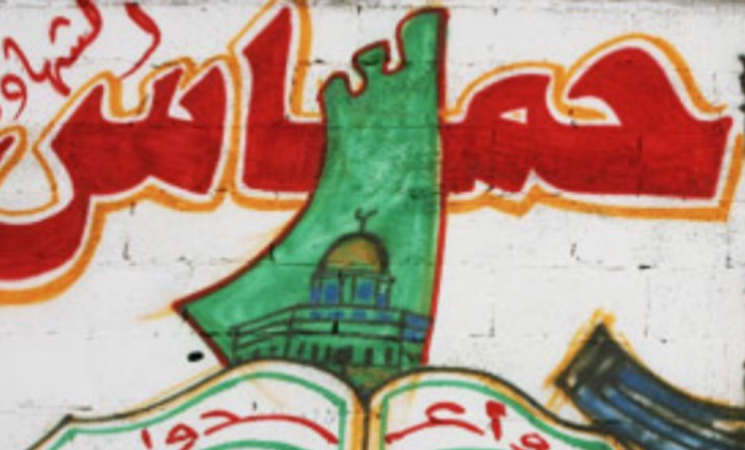
In Arabic, the term “hamas” means “enthusiasm, exaltation”. The Hamas Sunni movement claims to be part of the Muslim Brotherhood, which was already influential in Gaza during the Egyptian administration. Tolerated by the Israelis in order to face the Palestinian Liberation Organization (PLO) of Yasser Arafat, Hamas has a strong religious base.
Its real breakthrough on the Palestinian front dates back to the first Intifada (1987). Its spiritual leader, Sheikh Ahmad Yassin, imprisoned in Israel, was released on 1 October 1997. The founding members of Hamas who were instrumental in its development are: Abd el-Fattah Dukhan, Mohamed Chamaa, Ibrahim al-Yazuri, Issa Al- Najjar, Salah Chehadeh and Abdel-Aziz al Rantissi. In 1988, Hamas declared that Palestine is a land for Muslims, on which an Islamic state must be built and where the sharia must prevail. However, it does not dispute the historical role of Fatah and does not call into question the international role of the PLO as the Palestinians representative.
During the two intifadas, Hamas becomes highly influential on the religious and social front by assisting the deprived Palestinian population, which sometimes has to face the destruction of its houses. The movement thus becomes an opponent of Fatah, although the two organizations actually collaborate during this period. As a matter of fact, a “Unified Command of the Intifada”, comprising one third of Hamas members and two-thirds of PLO members is set up in December 1987. Hamas however withdraws in May 1988 to continue its fight alone.
Hamas’s military allies are the Izz el Din Al Qassam brigades, which have regularly attacked Israeli troops since 1994 but are being repressed by the Palestinian National Authority. Hamas, which spoke out against the Oslo process, subsequently join the “Alliance of Palestinian Forces”, a group of movements opposed to peace. The closure of the Palestinian territories by the Israelis despite the Oslo accords, delays in peace negotiations and the undemocratic tendencies of the Palestinian Authority, have helped Hamas find a firm and precious support among the local population. In 1996, Palestinians and Israelis observe an 18-month truce, negotiated by the PLO on behalf of Hamas, which ended with the targeted assassination by the Israelis of Yahya Ayache, a man responsible for a series of attacks in Israel. His death resulted in a series of suicide bombings in Tel Aviv and Jerusalem, precipitating Benyamin Netanyahu’s victory in April 1996 parliamentary elections.
The outbreak of the second intifada led to the assassination of Hamas spiritual leader, Sheikh Ahmad Yassin, in March 2004, and of his successor, Abdelaziz Al Rantissi, in the following month. On 25 January 2006, Hamas wins the Palestinian legislative elections (74 seats versus 45 seats for Fatah out of a total of 132 seats). The new government is boycotted by Israel, which refuses to deal with “terrorists”. International subsidies are disrupted and the situation deteriorates between the two Palestinian movements. An escalation ensues, culminating with Mahmoud Abbas’s desire to dissolve the Palestinian Assembly and the outbreak of a civil war between Fatah in the West Bank and Hamas in Gaza. The partition of the Palestinian territory then raises fear of a further deterioration of the Israeli-Palestinian conflict, despite Egyptian efforts to bring the two antagonists closer, as Palestinians are deprived from legitimate representatives in international negotiations. The reconciliation agreement between the two factions, which took place in May 2011 under the aegis of Egypt, paves the way for elections and a PLO reform.
Hamas leader today is Khaled Mechaal.
Source : Dictionnaire du Moyen-Orient, under the supervision of Antoine Sfeir, Bayard, 2011.

 ikhwaninfowhoswhoen.data.blog